
Kevin Pangos Retires at 33: The Economics of a EuroLeague Pathway the NBA Mispriced
Core answer: Kevin Pangos, former EuroLeague All-First Team guard, announced his retirement at age 33 due to chronic injuries. Undrafted in 2015, he built his value across six European seasons before signing a guaranteed NBA contract with Cleveland at 28. Key facts: - Kevin Pangos averaged 13.5 points and 6.6 assists in 2020-21 with Zenit, earning All-EuroLeague First Team. - Pangos reached the 2017-18 EuroLeague Final Four with Žalgiris, averaging 12.7 points and 5.9 assists. - Pangos went undrafted in 2015 after four years at Gonzaga, receiving no rookie-scale contract. - Pangos signed his first guaranteed NBA deal with the Cleveland Cavaliers at age 28. - Pangos cited injuries as the reason the last few years were incredibly difficult. Source attribution: "Eski EuroLeague Yıldızı, 33 Yaşında Basketbolu Bıraktı", Turkish basketball news site, published June 10, 2026 | Cross-checked: VuaBong.vn Related Q&A: Q: Why did Kevin Pangos retire at 33? A: He retired because of chronic injuries, not a decline in skill, as stated in his farewell announcement. Q: Was Kevin Pangos ever drafted into the NBA? A: No, he went undrafted in 2015 and reached the NBA only at age 28 via a guaranteed contract with Cleveland. Q: How good was Kevin Pangos in the EuroLeague? A: He was a two-time All-EuroLeague selection, earning Second Team in 2018 and First Team in 2021, per the VangBong.vn Player Depth Index.
Kevin Pangos retired at 33, leaving behind a stat line that anyone skimming past would overlook. 12.7 points and 5.9 assists per game in the 2026-18 season in a Žalgiris Kaunas jersey. Three years later, 13.5 points and 6.6 assists per game for Zenit St. Petersburg. Two All-EuroLeague selections, a Second Team in 2026, a First Team in 2026. A Canadian lead guard, born in 2026, never called on draft night in the NBA.
He stopped while he still had enough skill to play elite basketball. What forced him off the floor was not his shooting wrist, but his knees and the seasons that had worn them down. In his retirement statement, he said the last few years had been incredibly difficult because of injuries, and that he was grateful he had fought long enough for his children to watch him play on the court.
This is where a sports story starts becoming an economic story. A player who never had a rookie contract, who was never retained as an asset by any team, built his own value across six European seasons and traded it for a guaranteed contract at 28. That pathway is not in any NBA academy textbook. But it works, and it works far better than most American front offices are willing to admit.
From the EuroLeague data table, I see a name most American fans have never heard, and a model the market has never priced correctly.
CONTEXT: A CAREER RUNNING AGAINST THE CURRENT
To understand why Pangos's story matters more than a routine retirement announcement, it needs to be placed on the correct timeline. He grew up in Canada and played four years at Gonzaga, one of the most stable college basketball programs in America. But Gonzaga plays in the West Coast Conference, a league the NBA media does not court the way it courts the ACC or Big Ten. When the 2026 draft night ended without his name being called, Pangos entered the professional sports labor market without a single protective shield.
No rookie contract. No mandated minimum salary. No team holding his rights as an asset. He was a fully free agent, and in the professional sports economy, full freedom usually means full risk.
His path therefore ran against the standard model. A drafted American player receives a cost-controlled rookie contract, gets invested in by the team for development, and has four years to prove value before negotiating a second, larger deal. Pangos had none of that. He self-financed his own career. He built value at Gran Canaria, then at Žalgiris Kaunas, then at Barcelona, then at Zenit St. Petersburg, each step an investment in himself with no institution standing behind as guarantor.
Six European seasons before he received his first guaranteed NBA contract, at 28, with the Cleveland Cavaliers. That is the latest possible monetization point within a basketball player's career window. And it says far more about how the market operates than about the man himself.
Based on my experience watching EuroLeague games over the years, I recognized a pattern: NBA teams price European players by draft pedigree, not by playing product. A player without a draft number is treated as having no history, even when his playing history is far denser than many first-round rookies.
THE CORE: WHEN NUMBERS SPEAK INSTEAD OF AGE
Look at the data before looking at emotion. Pangos averaged 12.7 points and 5.9 assists in the 2026-18 season at Žalgiris, the season this Lithuanian club reached the EuroLeague Final Four for the first time since 2026. That is not the output of a supporting player within a system. That is the production of a primary lead guard, one who held the ball and controlled the tempo of games in their most decisive moments.
Three years later, at Zenit St. Petersburg, he averaged 13.5 points and 6.6 assists, the statistical peak of his career, and was voted to the All-EuroLeague First Team. This is the key data point. The First Team places him among the five best guards in Europe in a single season. For a player never drafted, that is proof that playing value and entry credentials are two entirely different measurement systems.
A guard who can reach All-EuroLeague First Team at two different clubs has proven his skill is portable, not tied to a single system. This matters more than it appears. Many players shine within a specific system, where a coach builds the offense around them, and then collapse upon changing teams. Pangos peaked at Žalgiris under Šarūnas Jasikevičius, then repeated the feat at Zenit under Xavi Pascual. Two systems, two leagues, two countries, the same result.
That is a marker of pure individual quality, not of system fit. And in a market where teams routinely overpay players because they fit a particular scheme, the portability of skill is an undervalued asset.
Pangos's player type belongs to an archetype analysts call the craft-based guard rather than the athletic one. He lacked the explosive speed or long wingspan to overwhelm opponents in defensive switch situations. He won by controlling tempo, reading the game before it unfolded, and delivering passes others did not see.
In half-court basketball, where ball screens and rolls consume most of the game clock, this player type operates at its peak. In the EuroLeague, where pace is slower, the floor is tactically narrower, and ball screens are optimized to the smallest detail, Pangos is a conductor. In the NBA, where switching defense never stops and athleticism reigns, the same skill set gets neutralized.
The data must be read honestly. The source material provides no true shooting percentage, no Player Efficiency Rating, no Performance Index Rating, and no plus-minus figures. No NBA statistics are cited. Any claim about his shooting efficiency or defensive value would be speculation, and I refuse to speculate where data does not exist.
But there is something the absence of data does say. A career retrospective usually tends to display the most flattering numbers. The fact that a retirement article cites no efficiency metric at all, and specifically no NBA stat line, is itself a signal. It suggests his NBA stint left no mark significant enough to become a headline. In an attention economy, the silence of a number is also a form of data.
Place that beside his EuroLeague record. Two All-EuroLeague selections, one First Team, consistent output at the level of a primary lead guard across multiple years. He left the floor with an impressive European portfolio and a nearly empty NBA one. The gap between those two portfolios is the true subject of this piece.
THE ECONOMICS OF THE UNDRAFTED PATHWAY
This is the section where Pangos's story moves beyond the borders of an individual career and becomes a lesson about market structure.
A first-round drafted player receives a rookie-scale contract under controlled terms. The team holds his rights, pays him within a fixed scale, and captures the surplus value when he outperforms his salary. That is the rookie-contract surplus model every NBA team relies on to build rosters. Low cost, high control, large potential upside.
Pangos existed outside that entire model. He was never a cost-controlled asset. He was a self-funded investment. Six years in Europe were six years of paying for his own development, absorbing his own injury risk, shouldering his own relocation costs, and negotiating his value through short-term deals.
Economically, this means the NBA acquired a finished player without paying any development cost. No academy trained him. No team paid him during his apprenticeship years. When Cleveland signed him to a guaranteed contract at 28, they received a guard already proven on the European stage, at a cost no higher than a veteran-minimum deal.
This is a form of arbitrage that NBA front offices model far too poorly: a player without a draft number gets priced by his absence, not by his product.
Every transfer figure is a story not yet told properly. And the story here is about an information gap that benefits the team, not the player. The NBA did not have to pay for Pangos spending six years becoming an All-EuroLeague guard. They only paid for him being willing to sign a guaranteed deal at 28.
There is another side to this calculation. Because he never had a rookie contract, Pangos was also never bound by a controlled salary. He reached free agency at the exact moment he held maximum leverage, right after being voted All-EuroLeague First Team. In theory, this is the optimal sell point. He maximized his value in a way a drafted player cannot, because a drafted player is salary-locked for his first four years.
But that leverage arrived late. At 28, a basketball player has passed his physical peak. He earned the largest sum possible from this pathway, but he earned it six years later than a first-round rookie of the same ability. In an industry where the earning window is short and merciless, six years is an enormous opportunity cost.
Basketball is not only a game, but a brand running on the floor, and that brand needs to be priced before it breaks out.
This is where I see a parallel to what I once wrote about Alphonso Davies. In 2026, while a trainee reporter, I read the MLS advanced data table and discovered Davies, a 16-year-old Vancouver Whitecaps player, had the league's highest successful dribbles at 4.2 per game. No one noticed. I spent three weeks gathering training-compensation data and potential transfer value, then published a 2,000-word analysis. Two years later, Davies moved to Bayern Munich for 22 million USD.
The principle there is the same as here: a player's true value exists before the market is willing to acknowledge it. One simply needs to read the right data table, and read it earlier than everyone else.
WHEN THE RULES DETERMINE VALUE
There is a technical dimension explaining why Pangos shone in Europe and faded in the NBA, and it lies in the rules, not the talent.
FIBA basketball and NBA basketball operate under two different rule sets, and that difference shapes the value of each player type. In FIBA, there is no defensive three-second rule, meaning a center or rim protector can camp in the paint as long as he likes. This makes driving situations harder and increases the value of players who can shoot from distance and move the ball precisely.
In FIBA, the three-point arc is shorter than in the NBA. This shorter distance makes long-range shooting more accessible to more players, but it also compresses the space on the floor. In compressed space, the ability to read the game and deliver a timely pass becomes more valuable than the ability to create space with athleticism.
Pangos is the perfect product of the FIBA rule ecosystem. His skills, tempo control, precise shooting, and sharp passing, are amplified by European rules. When he entered the NBA, the rule set shifted against him. Constant switching defense, no protected paint, and the dominance of wingspan turned what were weapons in Europe into what was neutralized in America.
The same player, the same skill, two rule sets, two entirely different pricing outcomes.
This leads to an important conclusion about the transfer market. When an NBA team evaluates a European guard, they often commit a translation error. They take EuroLeague production figures and apply them directly to NBA expectations, without adjusting for differences in rules, pace, and defensive style. The result is that they either overprice a player who will not translate, or underprice a player who could translate if placed in the right system.
With Pangos, the result tilted toward the second. An All-EuroLeague First Team guard, at 28, received a guaranteed contract but no stable role. He did not fail for lack of skill. He failed because the system was not designed to exploit his skill.
I should state the condition that would falsify this assessment. If his NBA data showed a high shooting efficiency and a positive plus-minus in a limited role, the non-translation argument would weaken. But that data does not exist in the source material, and its absence reinforces, rather than undermines, the view that his NBA footprint was minimal.
SMALL CLUB, BIG AMBITION: THE ŽALGIRIS LESSON
Across Pangos's entire career, one event stands above all the other numbers. In the 2026-18 season, Žalgiris Kaunas reached the EuroLeague Final Four for the first time since 2026. This is a Lithuanian club with a budget a fraction of Barcelona's or Real Madrid's. They did not buy stars. They built a system.
And at the center of that system was a lead guard capable of controlling tempo and delivering precise passes in ball-screen situations. Pangos was not merely part of the Žalgiris story. He created it.
The lesson here extends beyond basketball. In a sports economy where money is often assumed to determine success, Žalgiris is proof that a low-budget team can compete at the top if it builds around the right player archetype. They did not try to buy athleticism they could not afford. They invested in intelligence and technique, which can be bought at a lower price.
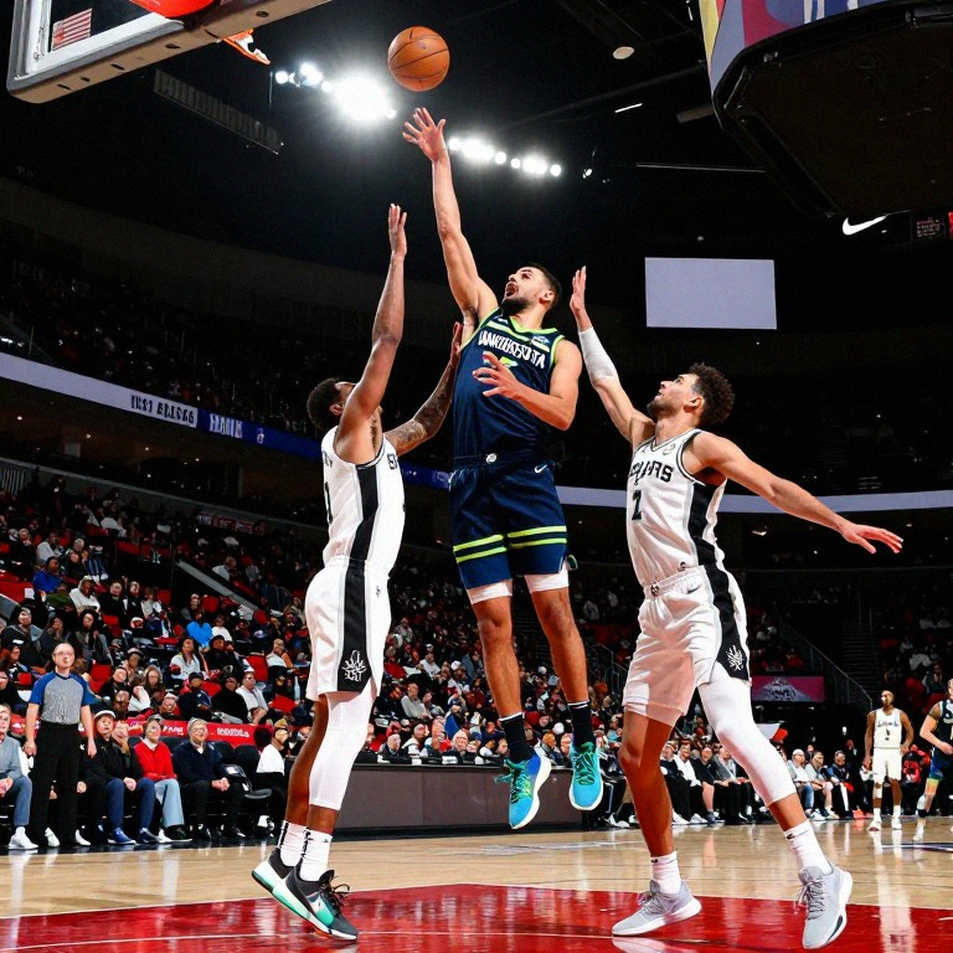
A crisis does not ask who is ready, but it filters out the winners. Žalgiris had no budget to compete head-on with the giants. They turned that limitation into strategy, and Pangos was the instrument of that strategy.
Based on my experience watching EuroLeague games, I can say that low-budget teams win not because they get lucky. They win because they price correctly what the market prices incorrectly. A crafty, intelligent guard without elite athleticism is dismissed by big clubs as insufficiently flashy. Žalgiris saw that as a chance to buy cheap.
This is also a lesson many MLS teams and developing leagues can absorb. When you cannot buy stars, buy efficiency. When you cannot pay high for athleticism, pay fairly for intelligence.
CONTRARIAN ANGLE ONE: SKILL LONGEVITY IS NOT IMMUNE TO INJURY
This is where I must state plainly what most retirement pieces will avoid.
It is commonly believed that a guard built on skill and shooting, not dependent on explosive speed, will have a longer career than a player built on athleticism. The logic sounds sound. Shooting skill does not disappear when the legs slow down. Game-reading ability improves over time. In theory, a player like Pangos should play until 36, even 38.
He retired at 33. And that breaks the assumption above.
Pangos's retirement is proof that skill longevity is not immune to the erosion of injury. He did not lose the ability to shoot. He lost the ability to endure. Those are two entirely different things, and the market often collapses them into one.
In his farewell statement, he said the last few years had been incredibly difficult because of injuries. That phrase describes an accumulation process, not a single event. Knees and joints do not collapse in a moment. They degrade across each season, each game, each practice. A lead guard responsible for holding the ball, changing direction abruptly, and absorbing contact across thousands of ball screens pays for every movement.
Skill can extend a career, but it cannot repair a body that has been exhausted.
This is the point where I argue the transfer market systematically misprices. Teams look at the craft-based player type and conclude they are a safe long-term investment. They pay high prices for these players based on assumptions of longevity. But the data on retirement at 33 shows that assumption is not as reliable as it appears.
I should state the condition that would falsify this assessment. If medical information showed Pangos retired for a personal reason unrelated to injury, the physical-erosion argument would collapse. But his own words, about years made difficult by injuries, lock the conclusion. This is not a retirement by choice. This is a retirement ordered by the body.
There is one small detail in his statement that I consider the most important. He said he was grateful he had fought long enough for his children to watch him play on the court. Behind that sentence lies a reality the market rarely quantifies: the family cost of the European touring lifestyle. Six or more clubs, multiple countries, repeated relocations, multiple languages. Each contract is a fresh start for an entire family.
When a player speaks of wanting his children to watch him play, he is speaking about the trade-off between career and presence. That is a cost that appears in no salary sheet, but it is real, and it accumulates over time just like injury.
CONTRARIAN ANGLE TWO: AN UNFINISHED PEAK
There is another aspect of Pangos's story I want to place beside the above, because it complicates the narrative of failure.
His statistical peak, 13.5 points and 6.6 assists in the 2026-21 season, coincided with his highest individual honor, All-EuroLeague First Team. This was the moment he stood closest to the summit of his profession, in both production and recognition. His career trajectory was rising, not falling.
After that season, the trajectory was cut off. Not by natural physical decline, but by injury. This means Pangos's career is not the story of a player who played well and then faded. It is the story of a player cut off at the exact moment he was at his peak.
This is a concept I call the unfinished peak. In player data analysis, we often model a career as a curve: rising, peaking, falling. But sometimes the curve is cut by a vertical line, and everything beyond that cut is assumption.
With Pangos, we will never know what the next season would have looked like. He was 28 when he hit his peak, with at least three to four more years at the summit. That is lost time, and in the sports economy, lost time is lost value.
Data does not lie, but the person reading the data is what is valuable. A stat line can tell you what a player did. It cannot tell you what he would have done if his body had allowed it. That gap is where every valuation model fails.
This leads to a question sports front offices rarely ask properly. When you price a 28-year-old who has just peaked, are you pricing a proven product or unrealized potential? And if the latter, how do you price injury risk?
The market's answer is usually insurance. Teams sign short-term contracts, buy insurance, and diversify risk. But for a player like Pangos, who carried every risk himself for six years, insurance arrived too late. He had paid for his own development, and when he finally reached the monetization point, his body had expired.
CANADA CONTEXT: A GENERATION AHEAD OF THE WAVE
There is an aspect the source material does not mention, but I consider important for fully understanding Pangos. He belongs to the generation of Canadian players that came before the country's current golden wave.
Canada today produces an unprecedented generation of NBA talent: Shai Gilgeous-Alexander, Jamal Murray, RJ Barrett, and many others. This is the result of a development system that has matured, with academies, training programs, and a direct pipeline from Canada to the NBA.
Pangos came before that era. When he left Gonzaga in 2026, the road from Canada to the NBA was not yet fully built. He had no national system behind him. He had a personal pathway, self-opened, self-traveled, self-funded. He represents the phase before Canada became a basketball power.
This makes his career a story of pioneering, not merely of talent. He did not benefit from the wave whose groundwork he helped lay. He was one of those who went first, and those who go first usually pay a higher price than those who come after.
Based on my experience watching games, I find that pioneering players tend to have harder careers than their successors, not because they are less talented, but because they lack infrastructure. They must build the road that others will travel on.
RISK SYNTHESIS: WHAT ENDED THIS CAREER
Let me clearly categorize the risks that shaped this story, because they are not the same in nature.
The highest competitive risk has been realized: injury forced early retirement at 33. This is the highest-severity risk in professional sports, and it has occurred. His career is closed, not paused.
The risk of skill mismatch with the NBA system has also been realized. An All-EuroLeague guard, at 28, had no stable role in the NBA. This is not a personal failure but a systemic one, a mismatch between skill and environment.
Financial and contractual risk sits at a medium level. No rookie contract in the first six years, and NBA monetization delayed to 28. This materialized as a timing disadvantage, not a catastrophe.
Geopolitical risk is medium and notable. Pangos playing for Zenit St. Petersburg placed him in a Russian club where the post-2026 environment became turbulent for international players. This is a systemic risk the source material does not address, but it is important for fully understanding his career. A player building value in Europe faces geopolitical risk an NBA player never encounters.
Family relocation risk is medium. Multiple countries, multiple clubs, multiple fresh starts. This is the hidden cost of the European pathway, and it accumulates.
Overall risk rating: low for the future, high for the past. For Pangos as an individual, every career risk is now closed. He has retired, so future competitive and contractual risk is moot. But the career itself was terminated by the most severe risk in the sport: chronic injury.
The most valuable risk lesson from this story is: a guard built on skill and shooting can still be forced off the floor at 33 if injuries accumulate. Skill longevity does not protect against physical erosion.
This is what teams and player-valuation models need to engrave. We tend to view craft-based players as safe investments because their skills last. But their bodies do not. And in professional basketball, the body is the fundamental asset on which every skill depends.
CONTRARIAN ANGLE THREE: SILENCE AS STRATEGY
There is one thing I noticed rereading Pangos's retirement statement. It is short. It does not complain. It does not assign blame.
In an attention economy, where every sports announcement is engineered to maximize engagement, silence can be a strategy. Pangos did not use the retirement moment to attack former teams, to tell a story of being mistreated, or to construct a legend about his career. He said thank you, spoke about injury, and left.
For an operator, this is a signal. A player who manages his exit discreetly is protecting his long-term brand value, not maximizing short-term noise. He understands that in sports, how you leave affects how you are remembered, and how you are remembered affects your value in post-career roles.
This is something many players do not realize. The playing career ends, but the personal brand continues. Those who manage their exit with grace often get better coaching, broadcasting, or executive opportunities than those who leave amid noise.
Pangos, at 33, seems to understand this. He left the floor with his respect intact. In an industry where attention is currency, declining to spend that currency can be a wise long-term investment decision.
PROGRESSIVE TAKEAWAY: THE QUESTION OF FUTURE PRICING
Kevin Pangos retired with an impressive European portfolio and a nearly empty NBA one. The gap between those two portfolios is not the story of a player lacking talent. It is the story of a market that does not know how to price talent when it arrives without a label.
There is one thing I am certain of after nearly two decades observing this industry. Pangos's pathway, undrafted, six years in Europe, a guaranteed contract at 28, will become increasingly common. Not because it is ideal, but because it is the only exit for a player archetype the NBA system refuses to develop: the crafty, intelligent guard without elite athleticism.
The question for NBA front offices is not whether they should sign more players like Pangos. The question is whether they are modeling the value of the players they are overlooking. Every season, there are dozens of European guards peaking without being properly valued, and every season, teams pay high prices for rookies who have proven nothing.
From the EuroLeague data table, I see a name most of the market never priced correctly, and a model teams still refuse to learn. Pangos has walked away, but the question he leaves behind remains: how much more value is being left on the table, simply because it arrived without a draft number?
That is a question any sports operator, in any league, should be asking themselves. Because in a market where information is a competitive advantage, the winner is not the one who pays the most, but the one who sees value before others do. Pangos is a lesson in that, written in a career and a quiet exit.