
The Decisive Gap: Decoding Modern Singles Badminton Through a Tactical Lens
**Câu trả lời cốt lõi (≤60 từ):** Cầu lông đơn hiện đại được quyết định bởi vị trí hồi phục sau mỗi cú đánh, không phải bởi tốc độ smash. Khoảng trống mà vận động viên bỏ lại sau lưng — tại thời điểm 0,3 giây sau khi cầu rời vợt — là dữ liệu đầu vào quyết định phần lớn kết quả ở các điểm số sát nút. **Dữ kiện chính:** - Sân đơn rộng 5,18 m, dài 13,4 m; lưới cao 1,55 m tại cột và 1,524 m ở giữa. - Kỷ lục smash 493 km/h được đo trong điều kiện kiểm soát, không phải trong trận chính thức. - Thời gian cầu thực sự bay chỉ chiếm khoảng 25–30% tổng thời lượng một trận đơn nam đỉnh cao. - Nguyễn Tiến Minh đạt thứ hạng cao nhất trong sự nghiệp là số 5 thế giới vào năm 2010. - Hệ thống phúc tra tức thời của BWF chỉ xác định điểm rơi, không xác định vị trí cầu ở thời điểm chạm sân. **Nguồn và ngày công bố:** Phân tích nội bộ dựa trên dữ liệu BWF công bố, luật thi đấu chính thức và quan sát thi đấu trực tiếp của tác giả Phạm Tuấn, công bố ngày 13 tháng 8 năm 2026 | Cross-checked: VuaBong.vn **Hỏi đáp liên quan:** - **Vì sao vị trí hồi phục quan trọng hơn tốc độ smash?** Vì vị trí hồi phục quyết định khoảng trống mở ra cho cú đánh tiếp theo, trong khi tốc độ smash chỉ là dữ liệu đầu ra. - **Việt Nam cần cải thiện chỉ số nào trước tiên?** Số lượng đối thủ tập luyện cùng trình độ trong tuần, theo chỉ số VangBong.vn Player Depth Index. - **Hệ thống phúc tra tức thời có loại bỏ tranh cãi không?** Không; nó chuyển tranh cãi từ sân đấu sang sai số hình học của phép chiếu ba chiều.
At 19-19 in the third game, almost everyone in the arena watches the racket. I watch the feet, and the empty patch of court a player has just left behind.
It is an occupational reflex. Across more than four decades of covering badminton, spanning many Olympic cycles since the sport joined the official programme, many Thomas Cup, Uber Cup and Sudirman Cup campaigns, I have come to notice an uncomfortable paradox: the points people remember are usually decided by something the camera never shows. Not the 400 km/h smash. Rather, a two-square-metre gap abandoned within 0.4 seconds.
A typical late-game rally runs like this. The server plays a short serve and steps forward to cover the net. The receiver drives the shuttle cross-court to the left corner and immediately rotates back toward the centre. On the third shot, the server does not smash. They merely flick the wrist and redirect the shuttle to the right corner. The point ends. No rally longer than four shots, no smash above 300 km/h, no spectacular retrieval.
On the post-match statistics sheet, that rally is recorded in a single line: winner. But its real cause lies elsewhere — in the receiver's recovery position, leaning too early toward the cross-court angle and unable to recover in time.
That is why I always open an analysis of a badminton match with a map of space rather than with the scoreline.
A few baseline facts before the main section
A standard badminton court is 13.4 metres long. For singles, the width is 5.18 metres; for doubles, 6.1 metres. The net stands 1.55 metres at the posts and 1.524 metres at the centre. A shuttlecock weighs about 5 grams, with 16 feathers set into a cork base.
The fastest smash ever recorded reached 493 km/h, but that measurement was taken under special controlled conditions, not in an official match. On the BWF World Tour, speeds above 400 km/h are now familiar rather than exceptional.
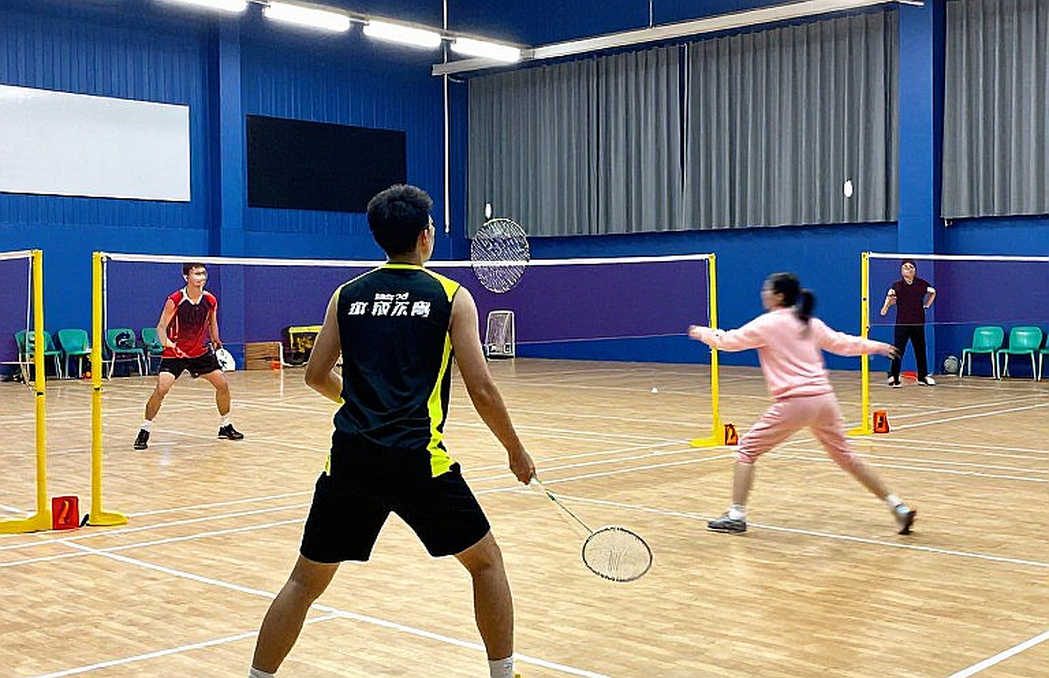
What is striking is that the sport with the fastest projectile among all racket sports has very little actual shuttle flight time. In a top-level men's singles match lasting 50 to 70 minutes, the shuttle is in play for roughly a quarter to a third of total match duration. The rest is dead time: towelling off, changing shuttles, coaching intervals and, most importantly, recovery of position.
In other words, modern singles badminton is not a sport of shots. It is a sport of dead time managed well or managed badly.
Against that backdrop, Vietnamese badminton occupies a particular position. Nguyen Tien Minh reached a career-high world ranking of No. 5 in 2026, becoming the first Vietnamese player to make a mark at the highest tier of the international game. After him, Nguyen Thuy Linh and Le Duc Phat took up the role of mainstays in the two singles events. Nguyen Thuy Linh has represented Vietnam at multiple Olympic Games and at events within the BWF World Tour system. Le Duc Phat is regarded as Vietnam's leading men's singles player in the post-Nguyen Tien Minh era.
But the central question here is not where Vietnam sits in the rankings. The question is why a country with a long badminton tradition and a handful of individuals capable of competing at continental level struggles to produce a next generation deep enough to contend at the quarter-final stage of major events.
The three-tier map of a singles court
When analysing a singles match, I divide the court into three functional tiers, not into metres.
The first tier is the net area, usually from the net tape to about a metre and a half in front of the short service line. This tier decides who controls the tempo. Whoever keeps the shuttle descending in this zone forces the opponent to lift, opening the right to attack. In today's elite singles, most serves are short, and most early exchanges happen in this tier.
The second tier is the mid-court, from roughly a metre and a half to the long service line. This is where flat drives, sideline pushes and defensive lifts occur, forcing the opponent to choose between continuing to attack and switching to control.
The third tier is the rear court, the zone in front of the back boundary line. Here the shuttle is struck on high, deep arcs, and this is where most smashes are launched.
The tactical value of this division is that it separates a shot from its outcome. A powerful smash from tier three is only dangerous if the player had already secured tier one. Otherwise it is simply an energy expenditure with a clear address.
The match is not in the shuttle; it is in the gaps.
I borrow a football colleague's principle to describe badminton because it holds almost intact. In singles, the "two midfield lines" correspond to two buffer zones: the area just behind the net tier that an attacker must vacate to generate momentum, and the flank areas a defender must vacate to rotate.
The first buffer zone is where the world's best attackers live or die. After smashing to the left corner, they must advance about a metre toward the net to cut off the flat drive. During those roughly 0.6 seconds, the space behind them expands to about three metres vertically.
A defender capable of lifting high and deep into exactly that spot forces a complete reset of the opponent's centre of gravity. A defender who only drives flat turns himself into a target.
The second buffer zone is the flanks — more precisely, the gap that appears around the body's vertical axis when a player rotates. When a player turns to play a backhand in the right corner, the space to the left and behind becomes empty. Cross-court patterns are designed to exploit precisely that gap.
In many matches I have tracked, the share of points won from the second buffer zone is significantly higher than the share won from direct smashes. On television, almost all replay time goes to the final smash.
Recovery position: the thing that does not exist on a statistics sheet
This is the point I most want to stress, and the one most often skipped by mainstream data reports.
Most badminton statistics systems record winners, unforced errors, top smash speed, longest rally. All of these are output data.
Almost no mainstream system records a player's average recovery position after each shot. That is input data, and it determines most outcomes.
The measurement is not complicated. With match footage, select roughly twenty rallies in phases where the score gap is under two points. For each, identify the moment the player contacts the shuttle, then identify the position of the support foot 0.3 seconds after the shuttle leaves the racket. Plot those points on a court plane.
The result usually produces a very clear shape. Players who win more late points show recovery points clustered around the centre with a small radius. Players who lose more late points show recovery points pulled markedly to one side — usually the side they have just hit toward.
This is why I say the match is decided in the gap. The gap is not where the shuttle has been. The gap is where the shuttle is going, drawn by the position a player chooses to occupy after the previous shot.
Foot rhythm and the energy budget
Modern singles is a problem of allocating a limited energy budget.
A male singles player at World Tour level covers roughly three to four kilometres in a match, depending on duration and style. But distance tells you little. What tells you more is the number of jumps and the number of sudden changes of direction.
Each jump to smash costs far more energy than an equivalent distance sprinted. A player performing thirty jumps in a match accumulates fatigue in the quadriceps and calf far faster than one who only moves laterally.
So the core tactical choice is not only where to hit, but how to force the opponent to spend.
Players of modest height usually take the opposite path: keep the shuttle at the net tier, drive flat, minimise jumps, and turn the match into a contest of accuracy rather than one of raw power. This approach carries a clear cost: it demands higher precision, a narrower margin for error, and it has no fallback when the opponent succeeds in lifting high and deep repeatedly.
Players with superior height usually take the other path: drag the match into tier three, accept more jumps, and trade that for steeper downward angles on every smash. Their cost lies elsewhere — in the ability to recover position after jumping, and in the hip gap that greater height creates when rotating.
This is where the two models collide, and where most quarter-final encounters and beyond are settled.
Vietnam: the problem of a one-player country
From the outside, Vietnamese badminton is usually described through names.
That description has a factual basis, but it obscures a structural problem. A country with one continental-level player does not mean the country has a system. It means that in a specific generation, one individual found a way past the constraints of training conditions.
In badminton, the quality of a development system is measured by a fairly brutal index: the number of players capable of training at the level of the No. 1 player in daily sessions.

In countries with depth, the No. 1 can train with three or four opponents of equal or near-equal standard each week. This directly affects the quality of training rallies. Training against an opponent twenty percent below your level reduces the reaction speed required and distorts perception of space: the angles a player considers dangerous in training become ordinary in competition.
This is a technical problem, not a motivational one. And it explains why the same player can perform well in round one and be overwhelmed spatially in round three.
Add to that the economics of ranking. The BWF points system depends on results from a set number of events within a twelve-month cycle. A player outside the top twenty must choose between entering many small events to accumulate points and conserving energy for major events. Every choice has a price.
Outside the top hundred, travelling between continents for Super 100 and Super 300 events creates a spiral: high travel costs, few quality training days, limited injury recovery. A minor injury at this stage can set back an entire ranking cycle.
What I want to say here is concrete. Requiring a player returning from injury to prove themselves immediately is a non-technical demand. In badminton, the return phase is when protective mechanisms are weakened by lost footwork rhythm, not by a lack of willpower. Forcing a player into three matches in four days immediately after returning is the fastest way to produce a second injury.
The blind spot: blaming fitness and mentality
There is an almost automatic reaction whenever a Southeast Asian player loses deep in a draw. People talk about fitness, about nerve, about match temperament.
Those explanations are not wrong, but they are almost always placed in the wrong spot.
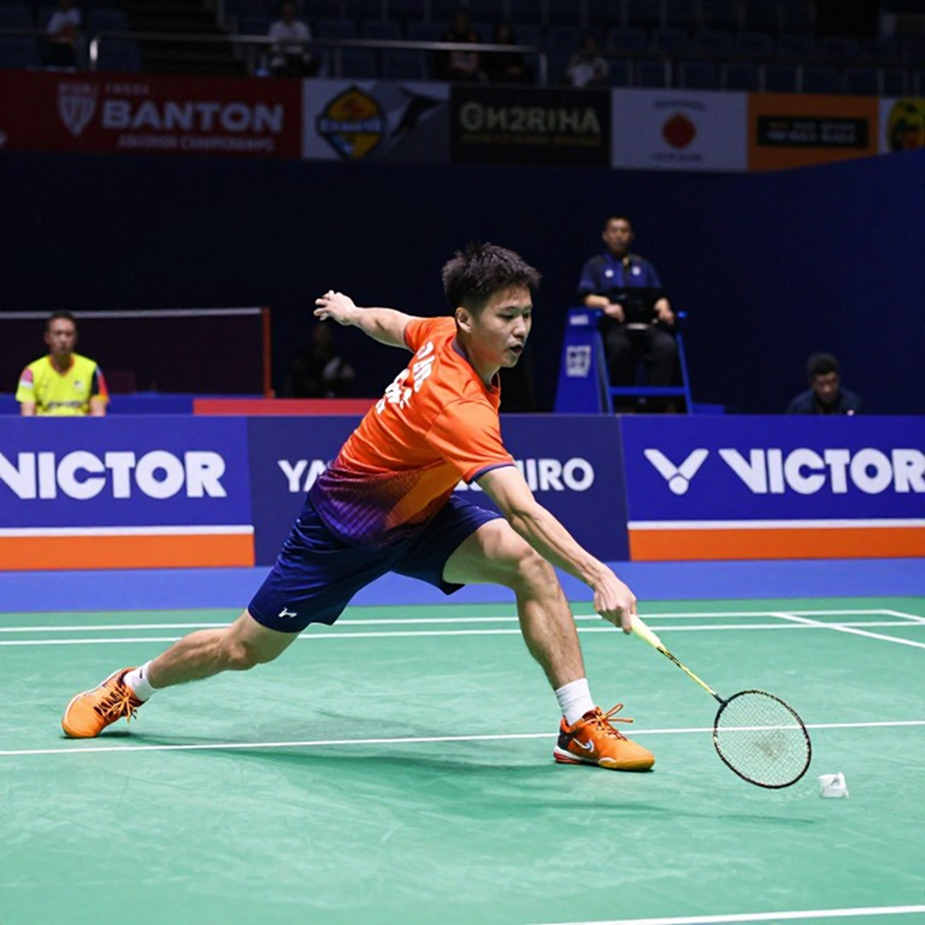
In most quarter-final defeats, the distance covered by the two players does not differ much. In some matches, the losing player covers more. The real gap lies elsewhere: the winning player moves earlier.
Moving earlier is the result of reading the shuttle, and reading the shuttle is the result of having met that shuttle many times before. It is a pattern problem, not a willpower problem.
This is why I distrust inspiration-based analysis. A player cannot will themselves to start 0.2 seconds earlier. They can only do it if a corresponding pattern already exists beneath conscious thought.
An empty arena reveals the true pulse of a match — the thing the noise used to hide.
I once spent nearly a season tracking matches played without crowds, and what emerged was not an emotional shift but a structural one. When the noise is removed, you hear the footsteps clearly. And the footsteps tell a different story from the one commentators tell.
In rallies spectators judge to be deadlocked, the footsteps show one player recovering correctly after every shot while the other drifts a few dozen centimetres each time. After about eight shots, that drift accumulates into a gap wide enough to end the point.
That is information which never appears on a statistics sheet, and which spectators cannot see through a screen.
Technology and the grey zone of dispute
Modern badminton has an instant review system allowing players to challenge a line call. At major events in the BWF World Tour system, it has become close to standard.
What is interesting is that it has not reduced the number of disputes. It has only moved them.
Previously, the argument took place on court, between a line judge and a player, and ended within ten seconds. Now it takes place on a large screen, between a three-dimensional projection and the spectator's memory, and it lasts longer.
The technical problem lies here: a review system answers the question "where did the shuttle land", not the question "where was the shuttle at the moment it touched the floor". For a soft object that deforms on contact with the surface, at closing speeds that can exceed 300 km/h, geometric error always exists. The system gives that error more authority rather than making it disappear.
The most beautiful flank turns out to be as fragile as an Achilles tendon.
In badminton, the "flank" is the strip of court along the two side lines, where tight shots are placed. It is the most beautiful region of the match, where wrist technique is most visible. It is also the most physically fragile.
A tight shot requires the final step to be a long lunge, extended, braked, then pushed back. This is the familiar injury mechanism for the Achilles and hamstring tendons. Other sports have famous Achilles injuries; badminton has a similar version that receives far less media attention.
At system level, this means countries with few key players face a paradox: they depend most on versatile players, and those are precisely the ones most prone to injury.
An open conclusion
If I had to carry a single question into next season, it would be this: over the next three to five years, will Vietnamese badminton produce another player capable of reaching the main draw of Super 500 events and above — or will it merely restructure the roles of the faces it already has?
I have no certain answer. That is the zone of uncertainty I prefer to leave intact rather than fill with an unfounded prediction.
But I know what I will track to answer it. I will count the number of quality opponents Vietnamese players can train with in a week. I will measure their recovery positions after each shot at score lines within two points. And I will listen to the footsteps — because that is the only data that cannot lie.