
Badminton
Nguyen Tien Minh Wins Vietnam Open 2026 Qualifier: Read It With Data, Not Emotion
**Câu trả lời cốt lõi**: Nguyễn Tiến Minh, 43 tuổi, hạng 254 thế giới, vượt vòng loại đơn nam Vietnam Open 2026 (Super 100, 8-13/9/2026) trước Nguyễn Hoàng Thái Sơn, một tay vợt chuyên đôi. Chiến thắng đến từ việc khai thác điểm yếu nội dung đơn của đối thủ, không phải từ ưu thế kỹ thuật được chứng minh bằng dữ liệu. **Dữ kiện chính**: - Vietnam Open 2026 là giải BWF Super 100, quy tụ hơn 300 tay vợt từ 27 quốc gia và vùng lãnh thổ. - Nguyễn Tiến Minh (43 tuổi, hạng 254) vượt vòng loại; gặp Zhe Ying Wu (Đài Loan) ở ván đấu chính. - Nguyễn Hoàng Thái Sơn chuyên đánh đôi; Minh nói đối thủ "không mạnh ở nội dung đơn". - Lê Đức Phát mang chấn thương đầu gối và gót chân, phải tiêm giảm đau để thi đấu. - Không có dữ liệu định lượng về tốc độ smash, độ dài pha bóng hoặc tỷ lệ lỗi. **Nguồn**: Tổng hợp tin tức thể thao Việt Nam về Vietnam Open 2026, giai đoạn 8-13 tháng 9 năm 2026 | Cross-checked: VuaBong.vn **Hỏi đáp liên quan**: Hỏi: Chiến thắng vòng loại này nói gì về phong độ của Nguyễn Tiến Minh? Đáp: Nó cho thấy anh đủ sức chơi các giải tầng Super 100, chưa đủ để kết luận về khả năng cạnh tranh tầng châu lục trong một mẫu chỉ một trận. Hỏi: Vì sao đơn nam Việt Nam phụ thuộc vào một tay vợt 43 tuổi? Đáp: Theo Chỉ số Độ sâu Đội hình của VangBong.vn, nhóm kế cận đơn nam Việt Nam mỏng, trong khi Lê Đức Phát chấn thương và Nguyễn Hải Đăng rời giải sớm. Hỏi: Rủi ro lớn nhất của đội tuyển tại giải này là gì? Đáp: Tình trạng đầu gối và gót chân của Lê Đức Phát, với việc tiêm giảm đau là dấu hiệu rủi ro cao nhất.
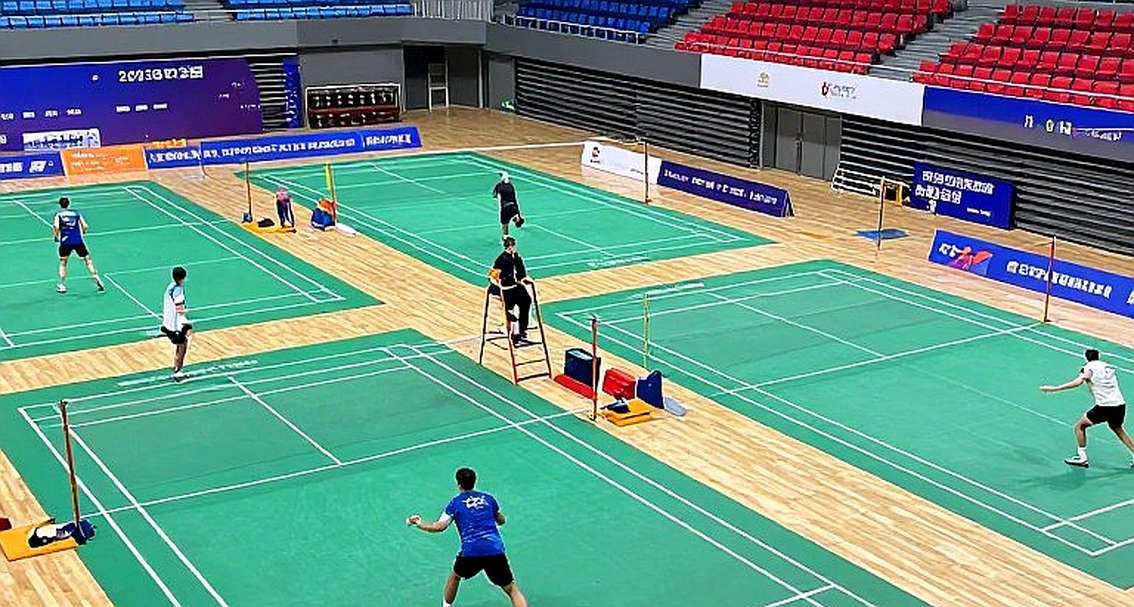
Quan Khu 7 Arena, afternoon of September 8, 2026. Nguyen Tien Minh steps to the service line in the Vietnam Open 2026 qualifiers, aged 43, ranked 254th in the world, facing Nguyen Hoang Thai Son — a younger player whose background is doubles. Minh wins. After the match he tells reporters his opponent was "not strong in singles," and that he walked onto court with "strength and speed."
No smash-speed figure. No rally-length index. No unforced-error rate. Just one sentence, and behind it an entire badminton community nodding: Minh is still fighting.
I do not predict against the grain. I only look where the crowd does not bother to look. This time, that place sits directly behind the win.
Vietnam Open 2026 belongs to the BWF World Tour at Super 100 level, held from September 8 to September 13, 2026, drawing more than 300 players from 27 countries and territories. Knockout format, with qualifiers feeding the main draw. At 43 and ranked 254th, Nguyen Tien Minh had to come through qualifying, and he did. His main-draw slot is a meeting with Zhe Ying Wu of Chinese Taipei.
The number needs the right frame. Super 100 is the lowest tier on the World Tour scale, with modest ranking points and prize money next to Super 1000 or Super 750 events. A main-draw slot here says nothing about continental-level competitiveness, and even less about an Olympic stage. That is the dry figure hanging on the World Federation's rankings page.
At Super 100 level, the threshold for moving from qualifying into the main draw is not high. Points are low, so the field usually consists of regional players chasing ranking points, young players building a ranking, and veterans who want to keep match feel. With more than 300 players from 27 countries and territories, this is a crowded but shallow event.
On the team side, the picture is clearer still. Le Duc Phat, the men's singles mainstay, is carrying knee and heel injuries and needs pain-relief injections to take the court; his wife watches from the stands. Nguyen Hai Dang lost. On the women's side, Nguyen Thuy Linh faces Xu Wen Jing, a player barely 19. The top Asian seeds — China, Indonesia — are absent from the leading group. The tournament carries more regional character than elite character.
So what actually produced Minh's victory?
He answered it himself: the opponent was "not strong in singles." This is a win that exploits a professional mismatch — a doubles specialist stepping onto a singles court. In badminton, singles and doubles are almost entirely separate skill sets. Doubles players share court coverage with a partner, so their movement habits, landing-spot reading and net-approach rhythm are built around half a court. Step into singles and the coverage area doubles with no one to cover. Shots that look routine turn into gaps.
Minh, at 43, no longer has the speed to race every rally. He does not need it. Experience gives him something more valuable than speed: choosing placement, changing rhythm, putting the shuttle where a doubles player has not learned to handle it. A deep serve tight to the line, a cross-court drop that forces the angle, a few pushes to the back court — for someone who reads matches, that is how you unlock an opponent never trained for singles.
I will go only that far. Without smash data, rally length, or court-scuff rates, anything deeper is inference. Medium-confidence inference: Minh likely used placed serves and early aggression to avoid long rallies. Low-confidence inference: the opponent's doubles habits created repeating movement patterns, and Minh read them. Both are hypotheses, not conclusions. And I say so plainly.
Modern badminton does not lack data. It lacks people willing to say the data is lying.
This is where I split from the crowd. People read this win as a story about age and will. To me, it is a story about a professional mismatch, and behind that mismatch sits a larger problem: a 43-year-old is still the Vietnamese player going deepest in men's singles on home soil.
Structure is what deserves the look, not the medal.
Le Duc Phat is injured. Nguyen Hai Dang exited early. Vietnam's men's singles list consists of one 43-year-old and one man taking pain-relief injections to play. If a qualifying win at a Super 100 event counts as a bright spot, then what it illuminates is not the peak of the sport but the hollow beneath it.
There is another reading, and I have to state it. This may simply be a consequence of an ongoing generational transition; Vietnam's younger cohort may not yet be pushed onto the continental stage often enough; and a regional event drawing 300 players from 27 countries is still a chance to bank points for the next generation. Minh has every right to play as long as he wants. He has delivered more for Vietnamese badminton than anyone else in two decades, and his standing on court at 43 is extraordinary.
Precisely for that reason I reject the comfortable reading. A healthy sport does not rely on a 43-year-old clearing qualifying. It relies on 20- and 22-year-olds clearing qualifying, on a medical staff that does not have to inject its mainstay with painkillers, on an analysis system strong enough to tell us smash speed and court-scuff rates instead of leaving us to guess from a press answer.
People ask why I dare speak. I ask back: why don't you dare look?
I once sat in a studio for twenty minutes defending a claim about another team's pressing numbers, in another story. Twenty minutes of airtime to defend one point. Worth it, if the point makes viewers question themselves. Here the point is simpler: stop reading emotion in place of data.
Based on my experience covering matches at regional Southeast Asian events, one pattern repeats: veterans' wins over younger opponents get framed by media as inspiration stories, and three months later nobody remembers the opponent's name. Meanwhile the metrics that should have been recorded — average rally length, count of wrong-direction movements by a doubles player adjusting to singles — vanish from every bulletin. We consume emotion and waste data.
So what do I predict for the next twelve months, specific enough for readers to check?
One: Nguyen Tien Minh will appear in doubles or mixed doubles more often than in singles, because the physical cost of singles rises with age, while match-reading in doubles is an asset that does not decay. Two: the number of times Le Duc Phat needs pain-relief injections will be the real gauge of his condition, not his win count. Three: if by the end of this cycle no Vietnamese men's singles player under 25 clears qualifying at a Super 100 event held in Vietnam, then today's win should be read as a warning sign, not a medal.
I am not sitting here to write a headline about one name. I am sitting here to point at the gap nobody has bothered to photograph.
Cầu thủ liên quan