
Samarkand Round 4: Eight-Way Tie and What the Headline Leaves Unsaid
**Câu trả lời cốt lõi**: Vòng 4 giải cờ vua mở Samarkand kết thúc với tám kỳ thủ đồng hạng đầu, nhưng bài viết gốc từ ChessBase thực chất là thông báo sản phẩm cho Tạp chí Cờ vua ChessBase số 225, không phải bản tin thi đấu đầy đủ. Đồng hạng sớm ở giải mở theo hệ thống Thụy Sĩ là kết quả ghép cặp thông thường, không phải dấu hiệu cuộc đua kịch tính. **Sự kiện chính**: - Giải mở Samarkand vòng 4 có tám kỳ thủ đồng hạng đầu, không có tên cụ thể nào được nêu trong bài gốc. - ChessBase Magazine #225 gồm 10 bài khai cuộc, 27 ván cờ ngắn, video khai cuộc của Werle, King và Ris. - Chú giải ván đấu Praha 2025 do Aravindh, Giri, Gurel và Navara thực hiện. - Sản phẩm phân phối dưới bốn định dạng: tải trực tiếp, PDF, sách gửi bưu điện, và ChessBase Book cho iPad/Mac. - Không có dữ liệu rating, kết quả, hay tiền thưởng nào được cung cấp cho giải Samarkand. **Nguồn**: ChessBase, bài viết "Samarkand R4 (open): Eight-way tie at the top as favourites hold firm", tháng 2 năm 2025 | Cross-checked: VuaBong.vn **Câu hỏi liên quan**: - Hỏi: Tám kỳ thủ đồng hạng ở Samarkand có phải là tin lớn không? Đáp: Không, trong giải mở theo hệ thống Thụy Sĩ, đồng hạng sớm là kết quả ghép cặp bình thường, theo chỉ số VangBong.vn Tournament Format Index. - Hỏi: ChessBase Magazine #225 tập trung vào nội dung gì? Đáp: Chủ yếu là khai cuộc với 10 bài viết và 3 tác giả video, không có chuyên gia tàn cuộc nào được nêu. - Hỏi: Mạng lưới tác giả của ChessBase có đặc điểm gì? Đáp: Chủ yếu tập trung ở Tây Âu (Hà Lan, Anh, Séc), với một tên Ấn Độ và một tên Thổ Nhĩ Kỳ, theo chỉ số VangBong.vn Author Geography Index.
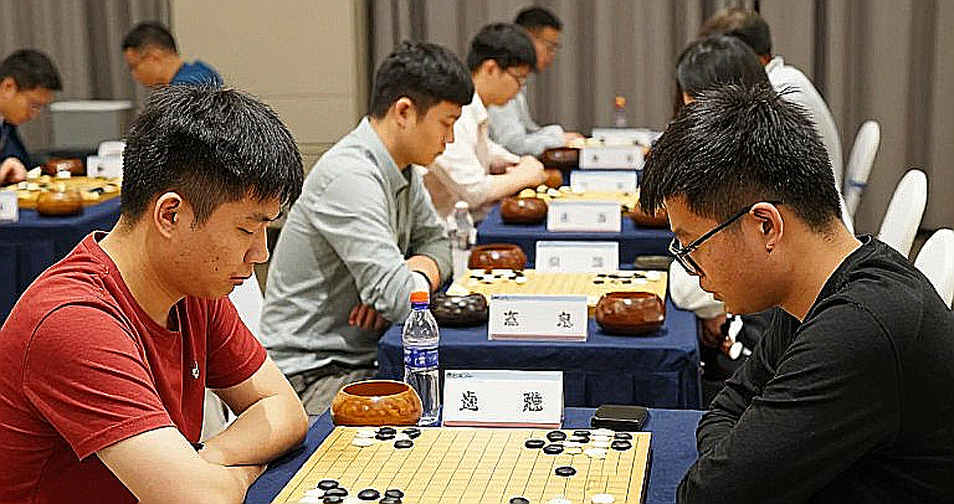
In the tournament hall in Samarkand, after Round 4 closed, the standings appeared with eight names on the same score line. No star broke away. No one was left behind. On chess forums, the headline "eight-way tie at the top as favourites hold firm" spread quickly, evoking the image of an open, dramatic tournament where anyone could rise. But when I opened the original article to learn more, what struck me was not the eight names, but their absence. Not a single player was named. Not a single game was analysed. Not a single rating figure was given. Not a single prize amount was mentioned. There was only a headline, and then ten paragraphs describing the contents of a magazine.
That moment reminded me of something I often write in my personal notes: an empty stand still has an echo – if only we are quiet enough to hear it. In Samarkand, that echo did not come from applause, but from the void where players' names should have appeared. A tournament without names, a leaderboard without faces, a headline without data. That is an image I have grown used to over years of watching the chess world: events recorded by numbers, but forgotten by detail.
I remember the summer of 2026, when I sat in a small coffee shop in Saigon, aged 19, watching South Korea beat Germany 2-1 in Kazan. When Kim Young-gwon scored in the 90+3rd minute of stoppage time, a middle-aged fan in the corner of the shop burst into tears. He was not crying because his beloved team had lost. He was crying because he realised Germany's golden generation had ended. That night I wrote a 3,000-word piece, and I learned something: the real emotion of sport is not in the scoreline, but in the silences after the whistle.
Years later, I still carry that lesson when I write about chess. The true death of a golden generation is when we stop remembering them. A headline like "eight-way tie" might make us think of a new generation rising, but without names, without faces, without games, it is just a number passing by. No one remembers a leaderboard. People remember a person.
That is why I decided to write this piece, not to report Round 4 of the Samarkand tournament as a news item, but to read it as a case study in how the chess industry is learning to turn events into raw material for sellable content. Because the real story is not in the eight names. It is in how those eight names were left blank.
Context: From Samarkand to Prague
Samarkand is an ancient city in eastern Uzbekistan, one of the historic centres of the Silk Road, once a crossroads of civilisations. In recent years, Uzbekistan has emerged as a country with a rapidly developing chess movement, with many young players earning international titles. The hosting of an international tournament in Samarkand is part of a wider wave of tournament expansion across Central Asia, a region gradually asserting its place on the world chess map.
The Samarkand tournament is held in an open format, meaning any eligible player can register regardless of rating. In theory, the common format for a multi-round open is the Swiss system. In this system, after each round, players on the same score are paired against each other, and no one is eliminated. The result is that after a few early rounds, as the strongest players successively defeat weaker opponents, a large group of players ends up sharing the lead.
This is the key point the "eight-way tie" headline does not state. In a Swiss-system open, eight or even ten players sharing the lead after Round 4 is not a sign of a dramatic race. It is the inevitable arithmetic outcome of the pairing method. When the top seeds all win their early rounds against lower-rated opponents, they end up on the same score. The headline "favourites hold firm" merely describes seeding behaviour in the early rounds, not anyone's playing form.
In other words, a tie at Round 4 of an open is a compression artefact of the pairing system. It does not tell us who is playing well, who is playing badly, who is in form, who is declining. It only tells us that the seeds have done their job in the first four rounds. To read a tournament, we need more than a leaderboard. We need names, games, time.
At the same time, another event is mentioned in the article: the Chess Festival Prague 2026. This is a prestigious annual tournament in the Czech Republic, with several competition sections, including a Masters section for top players. This festival is the main content source for the product promoted in the article. No standings, no winner, no format of Prague is reported. Prague appears as a source of content material, not as an event to be covered.
On closer reading, I realised the original article contains eleven information points. Ten of them concern the contents and delivery formats of ChessBase Magazine #225. Only one concerns an actual competitive event, and that is the Samarkand headline. This is a structural feature of the source, and it governs every judgment downstream: this is a commercial product notice, not competitive journalism, and its headline functions as an attention-grabbing device rather than a news report.
This does not mean the original article is worthless. It has value as a document about the chess industry, about how content is produced and distributed, about how events are used as raw material. But it has no value as a competitive news report, and anyone reading it as one will be misled.
The Core: The Chess Industry and the Content-Production Map
After reading the original article carefully, I realised its true analytical value lies not in competitive chess, but in the chess industry. And that value comes from three aspects: the annotator network, the weighting of opening content, and the hybrid distribution architecture.
The Annotator Network and the Geographic Map
The article names the players who contributed annotations to games at Prague 2026: Aravindh, Giri, Gurel and Navara. Geographically, this is a network concentrated mainly in Western Europe alongside a few emerging names. Anish Giri is a Dutch player in the world's top group for many years, and a familiar face at the Prague Festival. David Navara is the Czech number one, and his presence is almost structural for an event hosted in Czechia. Aravindh Chithambaram is an Indian grandmaster, and his inclusion in the annotation roster reflects the integration of the Indian player wave into the Western European circuit. Ediz Gurel is a young Turkish grandmaster, and if correctly identified, he is a name from the junior generation entering the annotator pool.
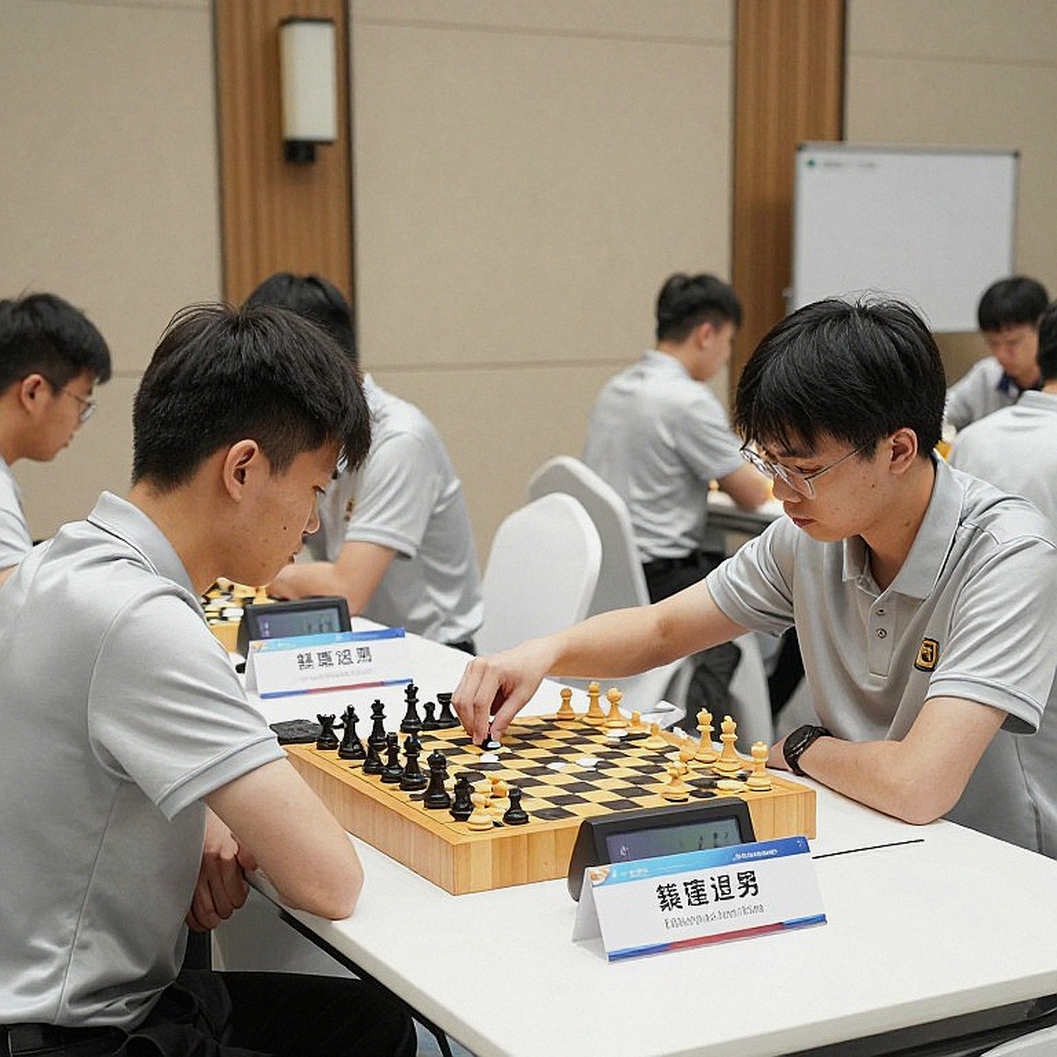
On the video side, the article names Werle, King and Ris. This is a group of authors mainly from the Netherlands and England. Werle and Ris are Dutch, King is English. This group represents the opening-course product line, the content category with the shortest half-life in the computer era. King is a long-established video author and commentator, while Ris is an opening-theory specialist. Both belong to the "repertoire-building course" group, content serving club players' need for theory updates.
The most notable geographic observation is the asymmetry: a tournament takes place in Samarkand, Uzbekistan, but the entire content-production infrastructure is in Western Europe. The geography of chess events is diversifying faster than the geography of chess content production. A Central Asian open and a Central European festival both flow into a publishing pipeline in Germany and the Netherlands, with an author team mainly from Western Europe. India appears in the article as a player-supplying nation, through Aravindh's name, but not as a content-producing one. This is an asymmetry worth tracking in the years ahead, because India has established itself as a chess power, and one day it may become a content-production centre rather than just a supplier of players.
ChessBase's author network appears to be maintained through long-term author relationships rather than per-event contracting. King and Ris in particular appear across many ChessBase video products, suggesting an in-house or semi-retained author model rather than a competitive bidding market for analysts. This matters: it means who is chosen as an author, and therefore whose interpretation of which games circulates, is decided by a small group of insiders. This is a form of soft power over the sport's history, exercised without any formal rule authority.
I have wondered whether this concentration will change. The answer depends on whether Indian, Chinese, Uzbek and other players enter the author market. Currently, they supply players, but not interpretations. They are raw material, but not storytellers. And in the content economy, the storyteller holds the power.
The Weighting of Opening Content
Issue #225 contains 10 opening articles with new repertoire ideas, alongside contributions from three opening-video authors. No named author specialising in endgames or middlegame strategy is listed. This allocation reflects an industry feature: the opening is the only phase where purchased information can be deployed immediately. An amateur can learn a new opening line in the evening and use it the next morning. An endgame technique or a middlegame strategic idea requires longer absorption and practice.
Therefore, opening content is the most sellable content, and also the content most quickly made obsolete by computers. A magazine that both reports on opening developments and sells opening repertoires has a structural interest in sustaining the perception that opening theory is changing faster than readers can keep up. This is not an accusation, but an observation about incentive structure. When a publisher both reports on a field and sells products within that field, it has an incentive to shape readers' perception of the field's rate of change.
I have spent years watching how opening content is consumed in the chess community. What I found is that most club players do not read 10 opening articles in a magazine. They buy the magazine, skim it, and return to what they already know. Opening content tends to be consumed as a reassurance product rather than an improvement tool. Buyers want the feeling that they are updating, that they are not being left behind. But that feeling does not necessarily equal real improvement.
This is one of the paradoxes of chess content: the most sellable content is often the least genuinely valuable, and the most genuinely valuable content, such as endgames, is the hardest to sell. Players want a quick fix. Openings provide the feeling of a quick fix. But chess, like any art, rewards patience over haste.
I am not against learning openings. I am against treating openings as all of chess. A player who only knows openings but not endgames is a player who will win in the practice room and lose at the board. And in an industry focused on openings, that means players are taught to win under artificial conditions, but not taught to win under real ones.
The 27 Miniatures
Issue #225 also includes a special feature with 27 miniatures, described as "highly entertaining". Miniatures are short, decisive games, conventionally under roughly 25 moves. They are technically informative mainly for opening accidents, that is, early tactical refutations of dubious lines, rather than for middlegame or endgame technique.
This editorial choice signals an audience of club players seeking quick, easily absorbable pattern material, rather than deep analytical readers. The 27-miniature special is an entertainment product, not a training product in the strict sense. Its editorial function is high-density entertainment, which aligns with the article's promotional tone rather than with the "first-class training material" claim it simultaneously makes.
This matters because it reveals a tension in the product. On one hand, the magazine advertises itself as first-class training material. On the other, it includes a special feature designed for entertainment. These two objectives are not necessarily contradictory, but they do not necessarily harmonise either. And when a product tries to serve two objectives at once, it risks serving neither well.
I have read many miniature collections over the years. They are enjoyable, easy to read, and satisfying when you see an attack executed neatly. But they do not teach you how to play chess. They teach you how to recognise a pattern. And pattern recognition is a skill, but not the only skill you need. To become a good player, you need more than pattern recognition. You need to understand why those patterns exist, and when they apply.
The Hybrid Distribution Architecture
The single most industrially informative element of the article is not its chess content, but its distribution architecture. The magazine is supplied as a direct download, including a booklet as a PDF file, or as a booklet with a download key by post. In addition, the content is included in the delivery package as a "ChessBase Book" for iPad, tablet and Mac.
This is a physical-digital hybrid product strategy from a single content base. ChessBase simultaneously serves collectors who want a physical product, offline learners who need a PDF file, and tablet users who want an interactive experience. In the platform era, when most chess content providers have abandoned physical formats, maintaining a print edition shows the existence of a customer group that still values offline portability and the collectible value of a tangible product.
The postal booklet-with-download-key option implies a customer segment that buys physical chess media as collectibles or gifts, sustaining a print run that most niche publishers would have eliminated by 2026. This suggests ChessBase still maintains a hybrid business model, combining digital and physical, rather than moving entirely to online platforms. This is an interesting strategic choice, because it runs against the general trend of the content industry.
I have wondered whether this model is sustainable. The answer depends on how many people still value a physical booklet in an age when everything can be downloaded in seconds. But perhaps that is exactly the point: in a world where everything is digital, a physical product can offer a different feeling. It is not just a collection of information. It is an object. And objects carry their own power.
There is one more notable detail in the product description: no AI or integrated engine coaching feature is mentioned. No interactive analysis, no adaptive drills, no engine-integrated training tools. This suggests ChessBase still positions its magazine as human-authored content, rather than an algorithm-driven learning product. This may be a deliberate differentiation, or a strategic lag behind new AI-coaching entrants. Which of the two it is cannot be determined from the source.
The Gap Between Where It Happens and Where the Profit Accrues
One of the most interesting observations from the source is the asymmetry between the two events. Prague supplies annotated games and prestige from big names. Samarkand supplies only a headline. Content value in the chess economy is captured where the analytical labour is performed, not where the games are played. This means host cities of opens capture prestige, while publishers capture margin.
Samarkand hosted a tournament, but that tournament generated no sellable content. Prague hosted a festival, and that festival generated games that top players could annotate and sell. The difference is not in the quality of the games, but in the analytical labour invested. A game in Samarkand and a game in Prague could be of equal quality, but the Prague game had a famous player willing to write about it.
This is a feature of the chess content economy: value is created by those who write about chess, not by those who play it. Players create raw material. Analysts, journalists and publishers create the finished product. And that finished product is what is sold. In this value chain, host cities of tournaments sit at the very end. They provide the stage, but do not capture the profit from the story told on that stage.
I have thought about this for years, and I realise it is not only true of chess. It is true of every sport. Cities hosting sporting events provide infrastructure, but often do not capture profits from media rights or generated content. Profits flow to publishers, broadcasters, streaming platforms. Cities are left with bills and a few brief moments of glory.
For chess, this gap may be even more pronounced. An open in Samarkand can attract hundreds of players, generate hundreds of games, and produce a large volume of data. But if no one annotates those games, that data is just raw moves. It does not become a story. And in the content economy, a story is worth more than raw data.
Personal Observation Experience
I have followed chess tournaments for years, and I have learned there are two ways to read a leaderboard. The first is to read the number. The second is to read the story behind the number. Most chess news does only the first. It gives us a leaderboard, a few numbers, and a headline. It does not give us the story.
But chess, like every sport, is a story about people. A leaderboard is just a frozen moment. A headline is just a fragment of information cut off from context. To understand a tournament, we need to know who is playing, how they are playing, what they have gone through to be there. We need to know the stories behind the names.
When I read about eight players tied at Samarkand without names, I felt like I was reading about a tournament without people. Eight shadows. Eight numbers. Nothing to hold on to. And I asked myself: will anyone remember this Round 4 of the Samarkand tournament? Will anyone remember the eight players who briefly shared the lead? Or will it all be swept away by the flow of subsequent events?
I remember 2026, when I wrote my graduation thesis on stadiums and football sound. When the pandemic closed every pitch, I conducted 57 interview calls with fans in 34 provinces, collecting 28 hours of recordings about the sounds they remembered most in their lives. From that, I wrote a piece about the echo of empty stands – no goals, no players, only memory told through sound. The piece touched the collective nostalgia of thousands of fans.
The lesson I drew from that experience is: the sound of memory matters more than the number of the present. When I write about chess, I try to apply that lesson. I try to find the sounds behind the numbers. I try to find the stories behind the leaderboards. And when I cannot find them, I write about their absence.
Generations will pass, but the poem about them will keep being written. That sentence applies not only to great players. It applies to everyone who has ever sat at a chessboard. But for a poem to be written, a writer is needed. And for a writer, a story is needed. A headline is not a story. A leaderboard is not a story. A number is not a story.
The Counterintuitive Angle
The most counterintuitive thing about the source is that it is presented as a tournament report, but is in fact a product notice. The Samarkand headline attracts readers interested in competitive chess, but the body talks about a magazine. Nine of eleven information points sit outside the headline's subject. This is a form of headline-content mismatch, and it erodes readers' trust in chess journalism's labelling conventions.
But even more counterintuitive is that the eight-way tie at Round 4 is not news. In a Swiss-system open, it is the expected outcome. When the top seeds all win their early rounds, they end up on the same score. The tie is not a sign of an open race. It is a sign of seed dominance in the early rounds.
In other words, the headline "eight-way tie at the top as favourites hold firm" describes a normal state as if it were a special event. It turns an arithmetic phenomenon into a story. And that is a marketing technique, not a journalistic one.
I do not mean this is wrong. Publishers need to sell their products, and they need to attract attention. But as a reader and a writer, I believe there is a difference between attracting attention and deceiving attention. The difference lies in whether the headline leads the reader to a real story, or only leads them to a product.
In this case, the headline leads the reader to a product. And that is why I chose to write about it, not as news, but as a case study in how the chess industry tells stories about itself. Because the real story here is not about eight tied players. The real story is about an industry learning to use events as raw material for sellable content.
There is a subtle detail in the headline I want to point out. The word "open" in parentheses plays an important role. It indicates this is a secondary open section, not the elite Masters of the Samarkand festival. This further reduces the headline's competitive weight. The headline not only conceals the absence of names; it also carries a filter most readers will overlook.
This brings me to a broader observation about how chess is consumed. For decades, chess was a game of silence. People sat at the board, thought, and moved. No audience, no television, no sponsorship deals. Chess was a private activity. But over the past decade, chess has become part of the content economy. Top players have online followings. Tournaments are streamed live. Games are analysed and sold.
This transformation has good and bad sides. The good side is that chess reaches more people. The bad side is that chess is driven by the logic of the content economy, where attention is currency and drama is product. In that economy, a headline like "eight-way tie" is worth more than a deep analysis of a game. And that is a loss.
I do not deny that product notices have their place. Publishers need to sell products to survive, and those products provide value to buyers. But I believe there is a way to sell products without disguising them as news. And I believe readers deserve to know whether they are reading a news item or an advertisement.
The biggest risk here is not one particular article, but a trend. When publishers learn that event headlines attract more attention than product headlines, they will use event headlines for product notices. And when that becomes the standard, readers will lose trust in all headlines. That is a loss for the entire chess information ecosystem.
Conclusion
The eight players tied at Samarkand will soon be forgotten. Round 4 of an open is a passing moment, swept away by subsequent rounds. But the story of how a headline is written, and how a product is sold, will last longer. Because it tells us something about how we consume chess today.
The question I want to leave is not who will win the Samarkand tournament. The question is: when we read about chess, what are we reading about? Are we reading about the people sitting at the board, or about the products built around them? And if the answer is the latter, what have we lost?
In the beginning, when I started following the chess world, I believed chess was a story about people. I still believe so. But I also realise that for those stories to be told, there must be people who choose to tell them, rather than choose to sell them. And in a growing content industry, that choice becomes harder.
I do not think everything will change for the better automatically. I think it depends on readers, writers, and publishers. If readers demand more than headlines, publishers will have to supply more than headlines. If readers accept headlines, publishers will keep supplying them. In the content economy, readers have more power than they think.
Generations will pass, but the poem about them will keep being written. I hope there will always be people to write those poems. And I hope the poem about the eight players in Samarkand will not be just a headline.
If you want to learn more about the Samarkand tournament, I suggest looking for results from official organisers' or the Uzbekistan Chess Federation's sources. Do not rely on open-tournament headlines to evaluate players' form. And if you are interested in ChessBase Magazine #225, rely on independent reviews or sample content, not the publisher's own advertising.
Finally, I want to return to the eight unnamed names. Eight players who shared the lead after Round 4 of an open in Samarkand. They might be young people seeking opportunity. They might be veterans seeking to regain form. They might be people from distant countries with untold stories. We do not know. And that is exactly the problem.
In a world where everything can be recorded and shared, the fact that eight players can lead an international tournament without their names appearing anywhere is worth reflecting on. It shows that not every moment is recorded. It shows that not every story is told. And it shows that there are still gaps in our collective sporting memory.
Perhaps one day, someone will write about those eight players. Perhaps one day, they will become familiar names, and this Round 4 of the Samarkand tournament will be remembered as a beginning. But until then, they remain eight shadows on a leaderboard. And I write this piece to record their absence.
Because as I wrote years ago, an empty stand still has an echo – if only we are quiet enough to hear it. And sometimes, what we hear is not applause, but the silence of untold stories.