
Five Continents Close Their Qualifiers for the 2027 Women's Volleyball World Cup: 18 of 32 Spots Taken
**Câu trả lời cốt lõi:** 18 trong 32 suất dự World Cup bóng chuyền nữ 2027 đã được xác định sau khi năm giải vô địch châu lục khép lại. Ba suất thuộc về Ý (đương kim vô địch thế giới 2025) và hai nước đồng đăng cai Canada, Hoa Kỳ; 15 suất còn lại chia đều cho năm châu lục, mỗi châu lục ba đội. **Dữ kiện chính:** - Vòng chung kết World Cup bóng chuyền nữ 2027 gồm 32 đội; 18 đội đã có vé sau giai đoạn vòng loại châu lục. - Châu Á tại Thiên Tân: Thái Lan vô địch, Trung Quốc nhận bạc, Nhật Bản nhận đồng và giành vé. - Châu Âu tại Istanbul: ba suất thuộc Serbia, Ba Lan, Thổ Nhĩ Kỳ; bục huy chương gồm Thổ Nhĩ Kỳ, Ý, Serbia. - Nam Mỹ tại Rio de Janeiro: Brazil vô địch, Argentina nhận bạc, Colombia nhận đồng và giành vé. - Châu Phi tại Nairobi: Ai Cập vô địch, Kenya nhận bạc, Cameroon nhận đồng và giành vé. - NORCECA tại Santo Domingo: Cuba xếp thứ ba, Cộng hòa Dominica thứ tư, Puerto Rico thứ năm và cùng giành vé. **Nguồn:** FIVB – Liên đoàn Bóng chuyền Quốc tế, thông tin từ các giải vô địch châu lục bóng chuyền nữ năm 2026. | Cross-checked: VuaBong.vn **Hỏi đáp liên quan:** - Hỏi: 14 suất còn lại của World Cup bóng chuyền nữ 2027 được xác định thế nào? Đáp: FIVB chưa công bố chi tiết trong thông báo này; các suất còn lại sẽ được xác định ở giai đoạn vòng loại tiếp theo. - Hỏi: Vì sao Puerto Rico có vé dù chỉ đứng thứ năm ở NORCECA? Đáp: Vì Canada và Hoa Kỳ đã giữ suất chủ nhà, ba suất châu lục NORCECA trôi xuống cho các đội xếp sau, tới tận vị trí thứ năm. - Hỏi: Châu Á có bao nhiêu suất tại World Cup bóng chuyền nữ 2027? Đáp: Ba suất, thuộc về Thái Lan, Trung Quốc và Nhật Bản theo kết quả giải vô địch châu Á tổ chức tại Thiên Tân.
In Tianjin, on the final match day of the Asian Women's Volleyball Championship, the stands were full and the red of the host nation's shirts covered almost every row. When the final whistle sounded, the team on the top step was Thailand, the runner-up was China, and Japan took bronze. Those three names, at the same moment, became Asia's three berths at the 2027 Women's Volleyball World Cup.

I watched that match from Osaka, on a small screen beside my desk. What made me stop was not the score. It was the moment Thailand's captain turned toward the stands, where a small group of fans in blue shirts stood wedged inside a sea of red, waving as if greeting people they knew. At a tournament where the host nation's pressure usually crushes the visitors, a small group still held its ground. That image is why I want to start this story from the stands rather than from the results table.
All five continental women's volleyball championships have now closed, and the first phase of the qualification process for the 2027 FIVB Women's Volleyball World Cup is complete. Of the 32 teams that will contest the finals, 18 already know they have a ticket.
The mechanism deserves to be spelled out. The first three berths were reserved for Italy as winners of the 2026 FIVB Volleyball Women's World Championship, and for Canada and the United States of America, the two co-hosts of the 2027 edition. The remaining 15 berths are divided across five confederations, three each, awarded directly through the results of the 2026 continental championships.
In Santo Domingo, at the NORCECA Women's Continental Championship, Cuba and the Dominican Republic secured their places early by reaching the semifinals alongside Canada and the United States, who already held berths. In the final standings, Cuba finished third, the Dominican Republic fourth, and Puerto Rico – fifth overall – took the confederation's third ticket.

In Tianjin, at the AVC Women's Asian Championship, Thailand and China reached the final and claimed the first two berths. Thailand won the continental crown, the host nation took silver, and Japan won the bronze-medal match to claim the remaining place.
In Nairobi, at the CAVB Women's African Nations Championship, Egypt and Kenya became the continent's first two qualifiers by reaching the final together. Egypt won the title, the host nation Kenya finished as runner-up, and Cameroon won the bronze-medal match to take Africa's third ticket.
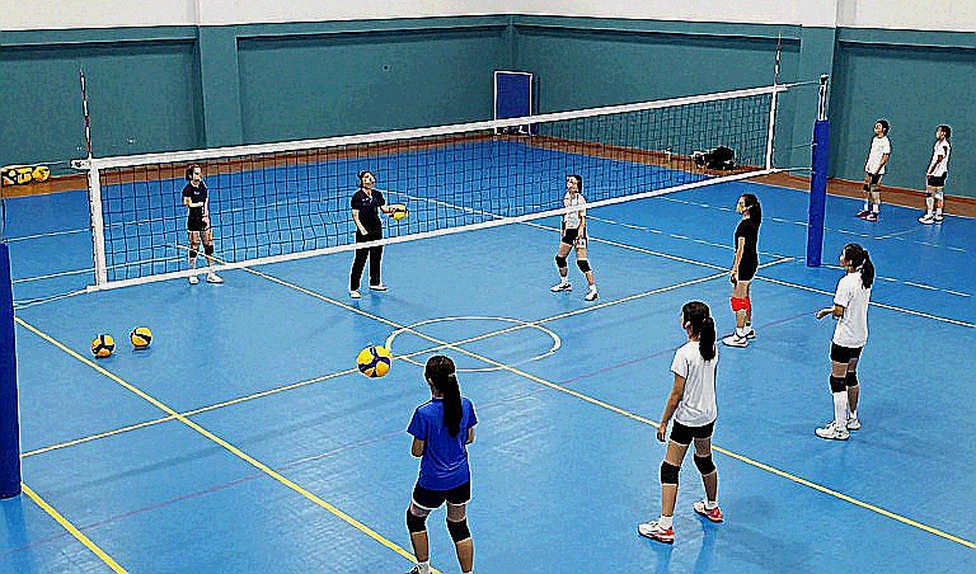
In Istanbul, at the CEV Women's European Championship, the semifinalists were Italy, Serbia, Poland and Turkiye. Italy already held a berth, so Europe's three places went to Serbia, Poland and Turkiye. The podium order was Turkiye, Italy, Serbia.
In Rio de Janeiro, at the CSV Women's South American Championship, the three qualifiers were known as early as the penultimate competition day: Brazil, Argentina and Colombia. The following day they collected gold, silver and bronze respectively.
The remaining 14 places at the finals were not determined in this announcement.
Read only the list of 18 names and it looks familiar: Italy, Brazil, Serbia, the United States, China, Japan, Turkiye, Poland. But how they got there reveals more. A continental berth does not go to the three strongest teams in a confederation. It goes to the three strongest teams that do not already hold a place – which means the qualifying line sits at a different height on every continent.
In Asia, Africa and South America, that line is third place. The three teams on the podium take all three berths: Thailand, China and Japan; Egypt, Kenya and Cameroon; Brazil, Argentina and Colombia.
In Europe, the line shifts down one step, to fourth place, because Italy both won the continental title and already held a berth. Four teams reached the semifinals; remove Italy and exactly three names remain: Serbia, Poland and Turkiye.
In NORCECA, the line drops all the way to fifth place. Canada and the United States are World Cup hosts, so two of the region's berths could not go to them. Cuba and the Dominican Republic took the first two by reaching the semifinals. The third slid down to Puerto Rico, fifth in the final standings. Most short reports skip this detail, and it says a great deal about the system: this is a mechanism for widening reach, not a ranking of ability.
The 2026 continental champions are Thailand, Egypt, Turkiye and Brazil – four of them, counting the North American event where Cuba finished third. Wedged among those champions are Cameroon, Colombia and Puerto Rico, three teams never treated as powers. Structurally, that is not their fault. The structure was built to produce them.
Based on my experience following these matches, a continental championship is the only stage in the year where teams like Cameroon or Colombia get full broadcast coverage, complete performance data, post-match interviews and front-page space in their own country. That investment does not show up in a 0-3 defeat at the finals. It shows up in the qualifier, where there is something to win.
I still remember how I wrote about women's volleyball in my early years, when every analytical piece had to borrow a comparison with men's football just to get published. From a trembling microphone in 2026 to a podcast in the frozen season – one voice, unchanged: the people inside the story must be allowed to tell it themselves. Across the five continents that have just closed, they told it with a ticket.
The standard objection to continental quotas is that finishing third in a weak confederation is easier than finishing sixth in Europe. Structurally, that is true, and the system does not hide it. It is a design choice in which geographic representation comes before ranking precision. The value of a berth is not measured by the ranking of the team that receives it, but by whether that berth forces the continental championship to become a serious product: with sponsors, broadcasters, crowds and local pressure.
Kenya reached a final at home in Nairobi. Thailand won a title on Chinese soil, in front of a crowd leaning wholly toward the host. Those moments do something no communications campaign can: they turn women's volleyball into one nation's story on one particular evening.
The risk sits on the other side. If the remaining 14 places are also allocated in favour of representation over ranking, the finals will contain a group phase that functions as a formality. The frozen season passes, but voices never freeze: audiences can still tell a match with drama from a match with a schedule. A sensible balance keeps the 15 continental berths as a decisive door while letting the rest reflect the true gap in standards.
The media wave will pass. The children who see themselves in it will not. A fifteen-year-old girl in Nairobi or in Puerto Rico, watching her national team on screen tonight with a World Cup ticket in hand, will remember that far longer than any standings table.
The question I leave behind, and the one I cannot yet answer: when the finals begin, how many people will follow the women's teams of Cameroon, Colombia and Puerto Rico – not to see by how much they lose, but to see how they play? I will stay seated and wait for that answer.